

un/learn ai
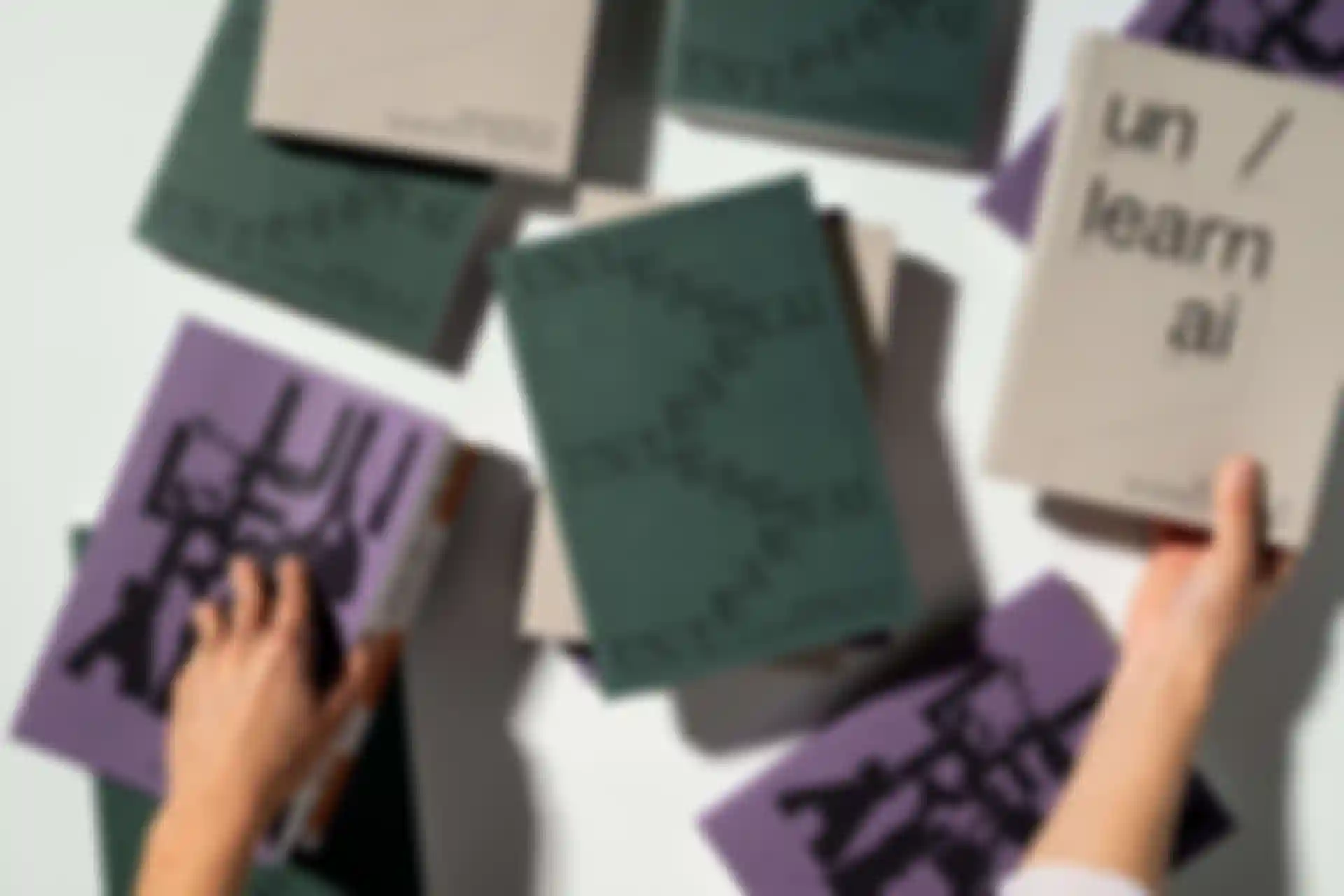
The un/learn ai publication series consists of three parts: Approaching, Navigating and Integrating AI in Aesthetic Practices, which provides insights into the four-year research project KITeGG. The three books contain articles by KITeGG researchers and visiting lecturers, student projects, as well as materials from the Summer and Winter Schools.
Each book highlights a phase of the research project and is curated around different focus topics. The first volume, Approaching AI in Aesthetic Practices, introduces the project, its team and infrastructure, as well as teaching approaches and research findings. The second volume, Navigating AI in Aesthetic Practices, is our most research-focused volume. It presents reflections on the challenges and opportunities of teaching AI in design and art education. It also covers wider topics, such as the implications of AI on society and visual culture. The third volume, Integrating AI in Aesthetic Practices, presents strategies for incorporating AI into design teaching as well as student projects developed throughout the research project. Another part is dedicated to reflections on our findings and an outlook on future developments.
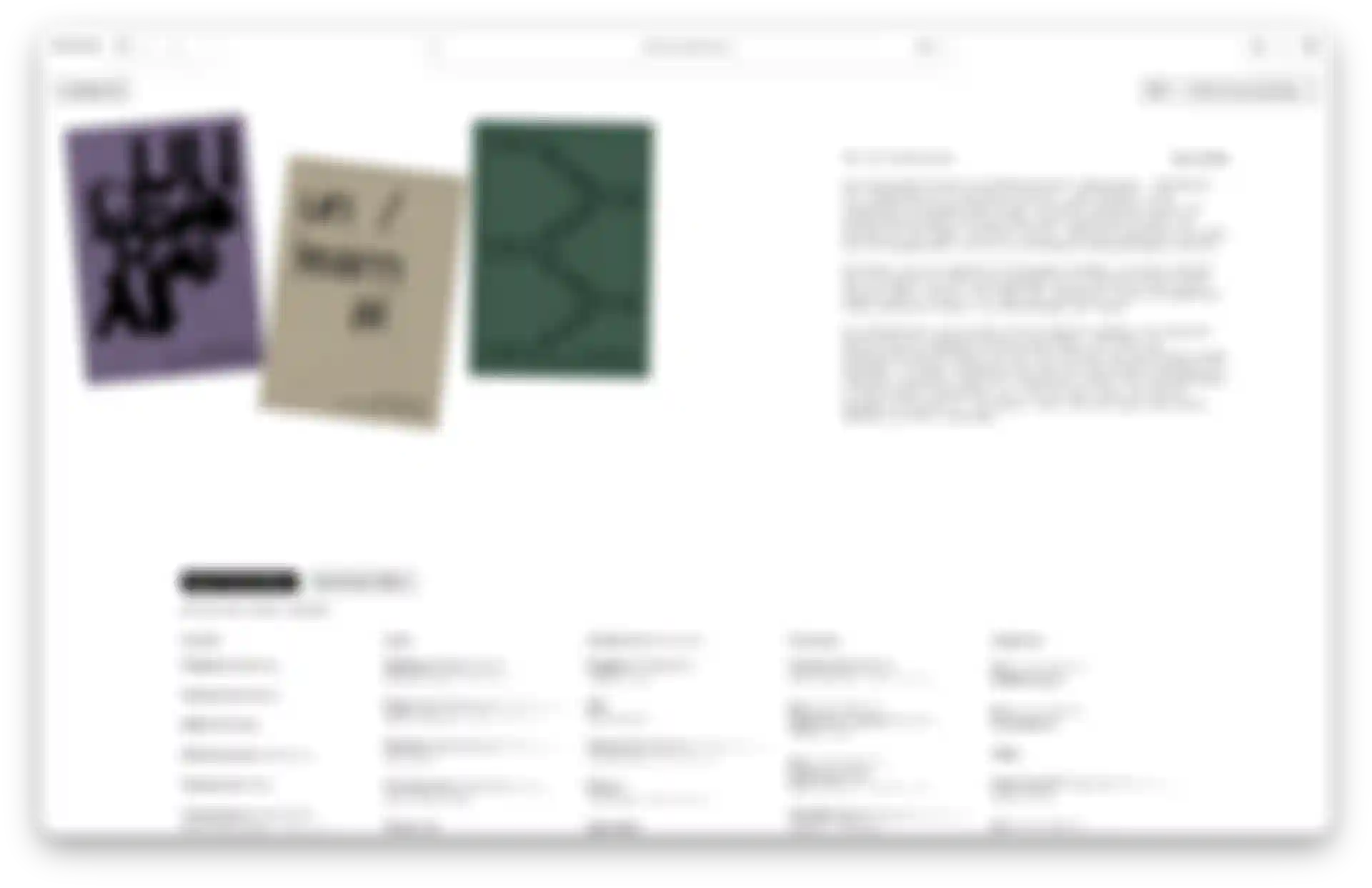
The publications are available as limited-edition prints or as PDF downloads on the website. There, articles can be browsed by topic or language and non-printed content such as additional translations and videos can be explored.
Concept and Implementation
Staying true to the experimental approach of the research project, we aimed to find creative ways to use AI technologies in designing and implementing the publication. A different approach was taken for each book to explore the possibilities of AI in design publishing. This led to the decision to set up the entire publication as a web-to-print publication. In web-to-print publishing, content management and layout design are done in a web environment. Therefore the whole publication process was digital and thus adding AI technologies into the mix was not cumbersome but rather a natural step. Thus, the entire publication process was digital, and incorporating AI technologies was a natural step. For content management, we used PubPub, an open-source platform for publishing scholarly works, as well as paged.js, a JavaScript library that creates print-ready documents from web content.
For the first volume, Approaching AI in Aesthetic Practices, we implemented semantic text chunking. Here, texts were analyzed by an NLP algorithm, split into smaller sections (chunks), and linked together based on their semantic similarity. The design decisions of the publication were informed by this. As a result, color gradients switch orientation every time a new chunk appears in the text. A custom navigation system links every chunk to semantically similar chunks within the book. This allows readers to explore the publication in a non-linear way.
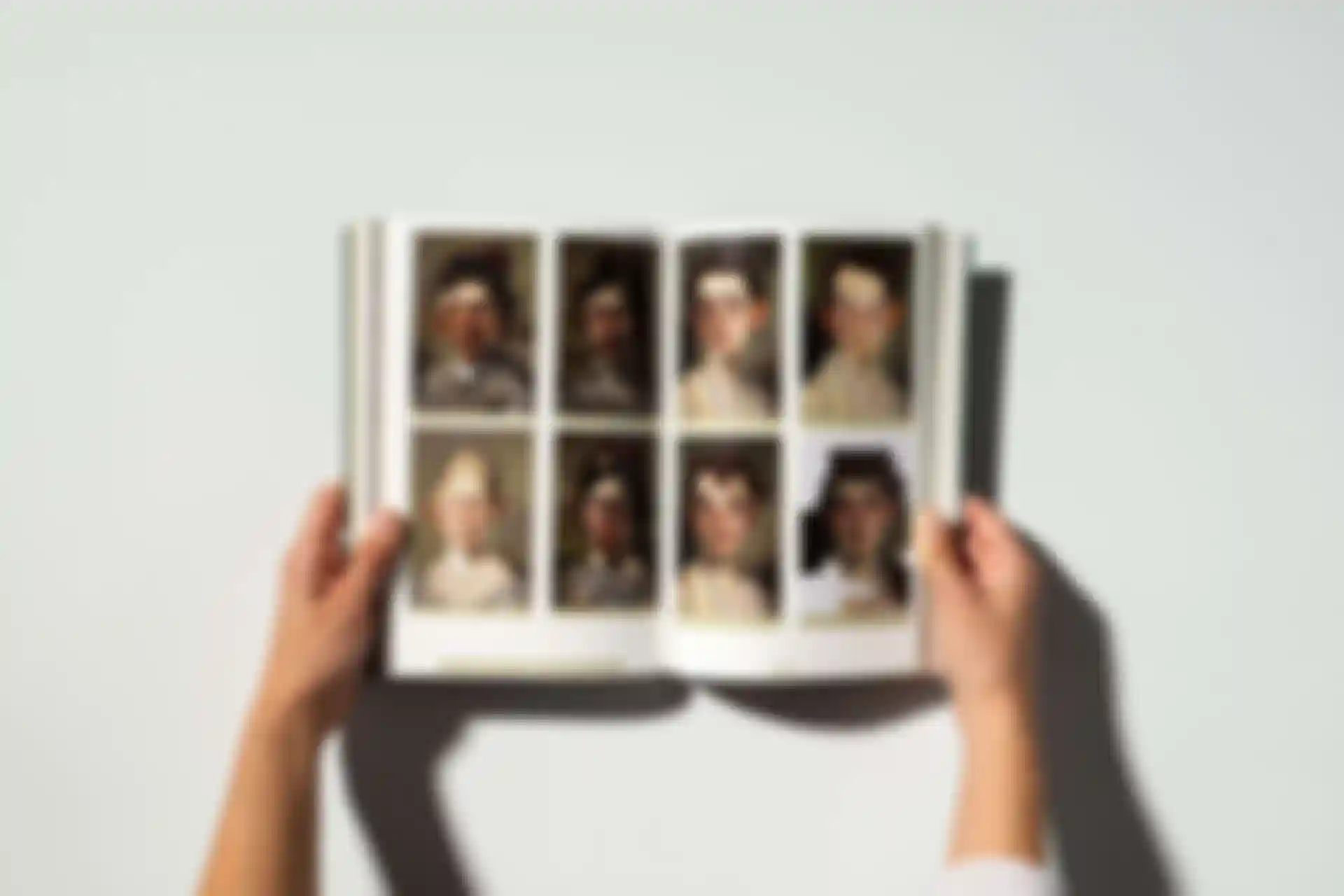
The second volume, Navigating AI in Aesthetic Practices, incorporated further analytical layers using NLP algorithms. Chunks were then examined in relation to a selection of key terms. This was clearly illustrated in the background of each page as a tree structure, showing the semantic focus of each chunk. Additionally, chapter headings were tokenized, and every token was framed by its token ID. The position of each token is determined by its algorithmic weight, providing insights into how the AI model interprets and values certain tokens.
The third volume, Integrating AI in Aesthetic Practices, maintained these features but extended the chunk references to span across all three books. This created a global navigation system where references now seamlessly connect from across the entire publication series, both in print and on the website.
It was a logical step to design and implement a website for the print publications, given that they were built using a web-to-print approach. The design elements and features for the print were already defined, so translating them into a digital format was a straightforward process.